
- Home
- Rotary Checkweigher for Automated Production Lines
Rotary Checkweigher Solutions
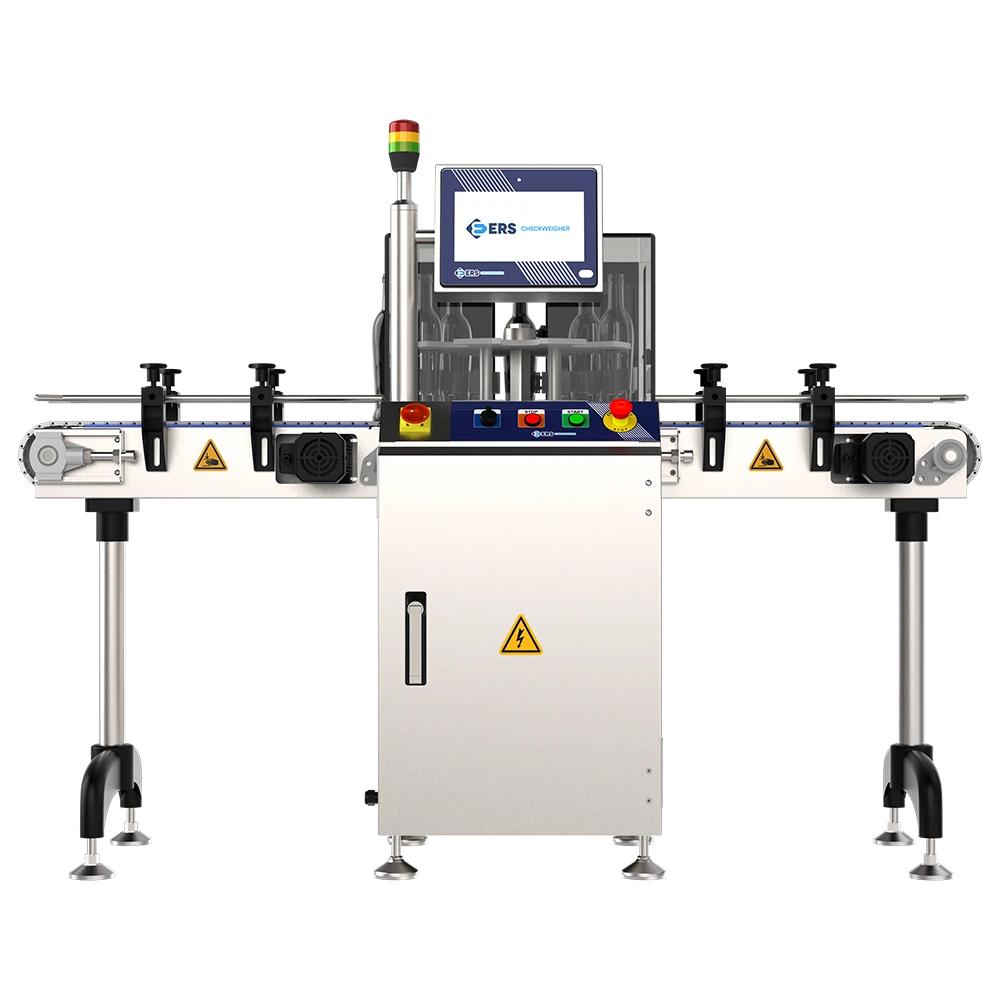
Why Rotary Checkweighing Matters in High-Speed Production
In modern automated production environments, manufacturers are under constant pressure to increase throughput while maintaining strict control over product quality and consistency. This is where a rotary checkweigher becomes a highly effective solution. Unlike traditional inline systems, rotary checkweighers are specifically designed for multi-lane and continuous flow applications where speed and efficiency must operate together without compromise.
For industries such as food processing, pharmaceuticals, cosmetics, and consumer goods, production lines often handle thousands of units per hour. In such conditions, even minor weight variations can lead to compliance issues, product inconsistency, or financial loss due to giveaway. A rotary system helps address these challenges by combining rapid weighing capability with stable and repeatable performance across high-speed operations.
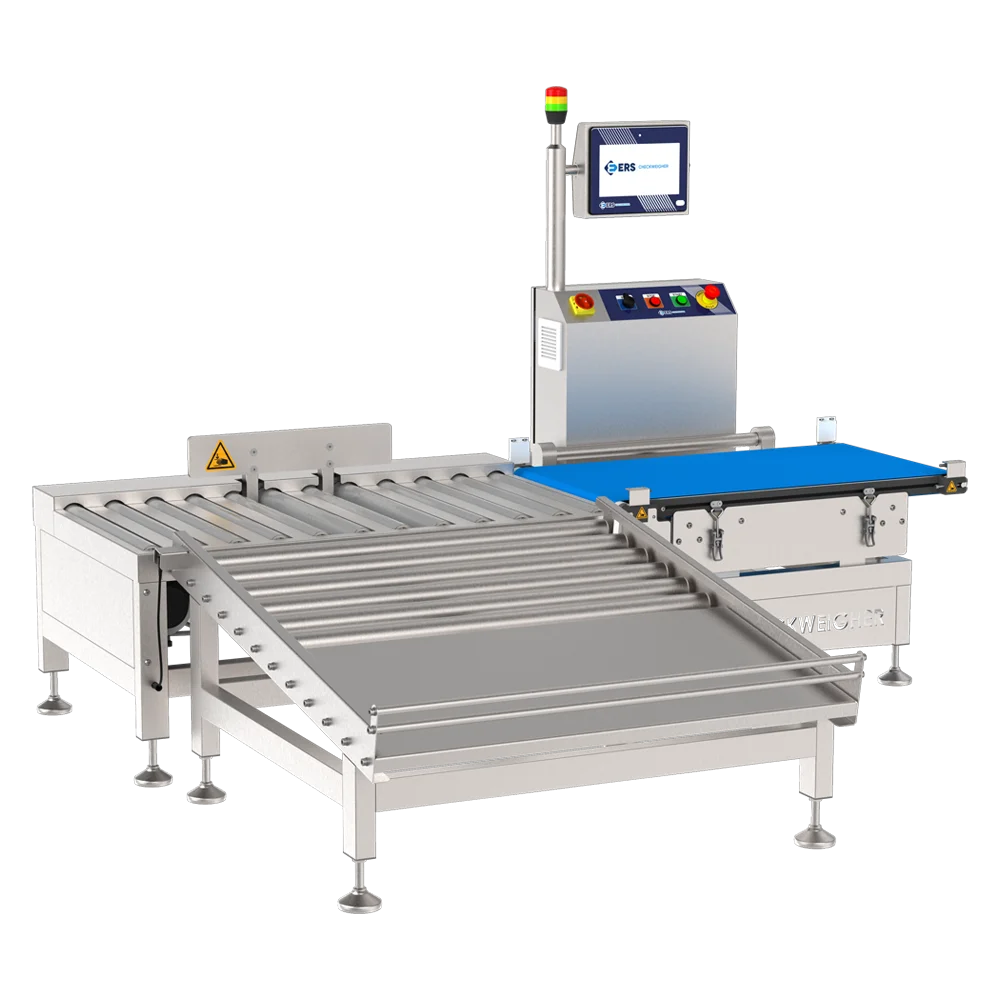
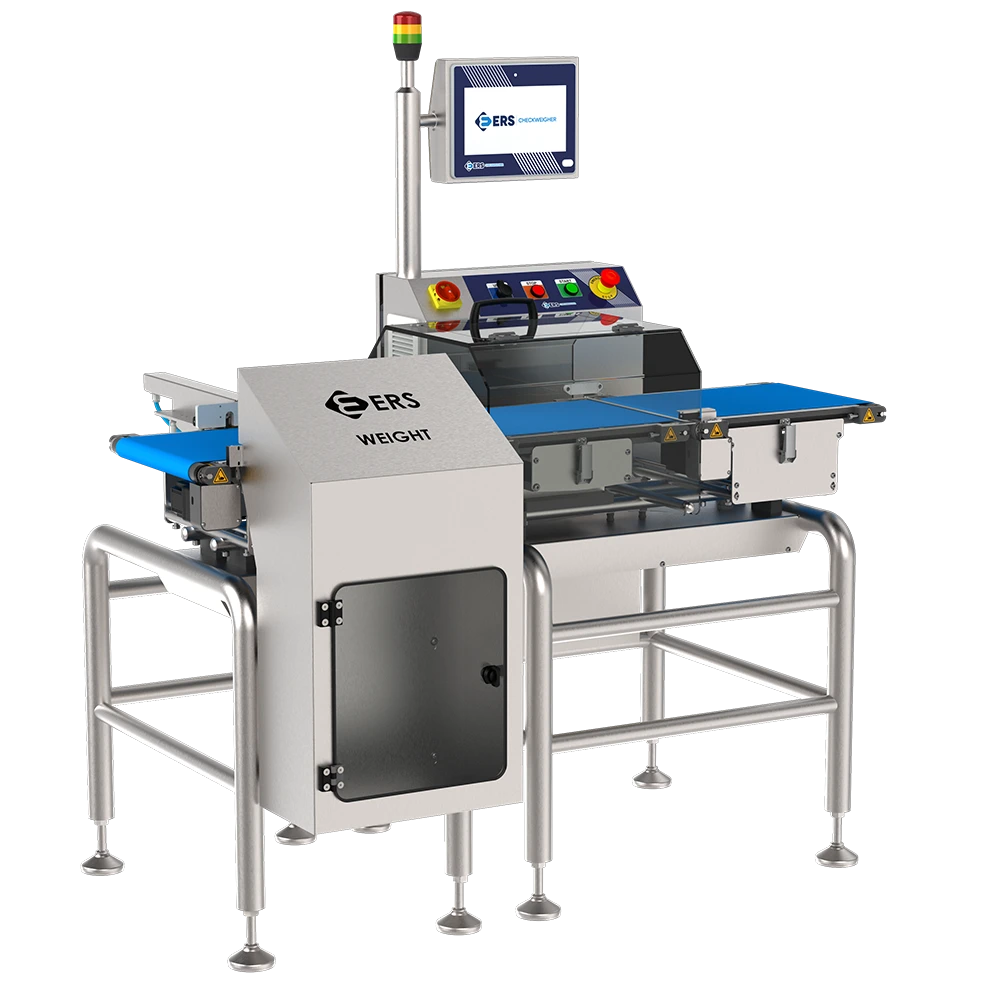
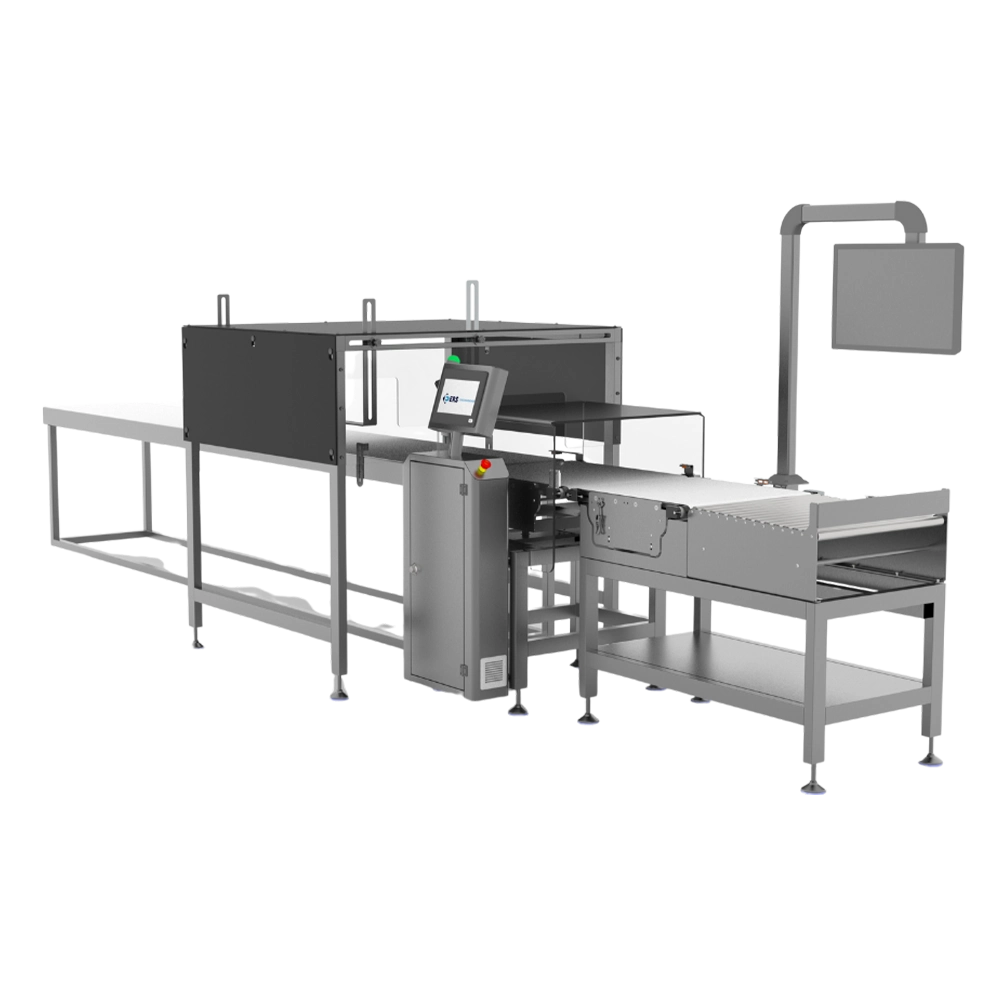


Designed for Automated Production Lines
A rotary checkweigher for automated production lines is engineered to operate as part of a synchronized system where products move continuously through multiple weighing stations arranged in a circular configuration. This design allows products to be weighed individually at high speed without interrupting the production flow.
Unlike conventional conveyor-based checkweighers, rotary systems distribute products across multiple weighing points, significantly increasing throughput capacity. This makes them especially suitable for filling lines, bottling systems, and packaging operations where maintaining production speed is just as important as ensuring accurate weight control.
High-Speed Multi-Lane Weighing Capability
One of the main advantages of a rotary system is its ability to support high-speed checkweighing across multiple lanes or product streams. Instead of relying on a single weighing point, the rotary mechanism allows several products to be weighed simultaneously in a continuous cycle.
This multi-lane structure improves efficiency by reducing bottlenecks and allowing production lines to operate at maximum capacity. For manufacturers working with high-output filling or dosing systems, this capability ensures that weight inspection keeps pace with production rather than slowing it down.
Improving Weight Accuracy and Consistency
Weight accuracy is a critical factor in any automated production line. Underweight products can create compliance risks and customer dissatisfaction, while overweight products lead to unnecessary material loss. A well-designed rotary checkweigher system helps maintain tighter control over product weight by checking each unit against predefined tolerances in real time.
Because the system operates continuously and at high speed, it provides consistent feedback to the production process. This allows manufacturers to identify variations early and maintain better control over filling accuracy, resulting in more uniform products and improved overall quality.
Precision Control
Ensures accurate product weight verification across automated processes with reliable and repeatable performance.
Continuous Operation
Maintains uninterrupted production flow with smooth rotary movement for stable and consistent weight measurement.
High-Speed Weighing
Supports rapid multi-lane product inspection with a rotary system designed for continuous high-throughput production lines.
Efficient Integration
Fits seamlessly into automated filling and packaging lines, improving overall production efficiency and process control.
Applications of Food Checkweighers
Supporting Continuous Production Flow
In automated environments, stopping or slowing down the line for inspection is not a viable option. A rotary checkweigher supports continuous production by performing weight verification without interrupting product flow. Products are handled smoothly as they move through the rotating platform, ensuring stable measurement conditions even at high speeds.
This continuous operation helps maintain production efficiency while still ensuring that every product is inspected. It also reduces the need for manual checks, allowing operators to focus on overall line performance rather than individual product verification.
Reducing Product Giveaway and Operational Costs
One of the key financial benefits of using a rotary checkweigher is the reduction of product giveaway. In many industries, manufacturers intentionally overfill products to avoid the risk of underweight packaging. While this approach may reduce compliance concerns, it often leads to significant hidden costs over time.
A precise automated checkweigher helps manufacturers keep product weights closer to target levels, improving cost control without compromising quality. In high-volume production environments, even small improvements in weight accuracy can result in substantial savings over time.
Integration with Filling and Packaging Systems
A rotary checkweigher is most effective when integrated directly with upstream filling equipment and downstream packaging systems. This allows the inspection system to function as part of a larger automated workflow rather than as a standalone unit.
Through proper integration, the system can support feedback loops that help optimize filling performance, improve process stability, and reduce variation across the line. This creates a more connected production environment where weight control contributes directly to overall efficiency and product quality.
Suitable for Food, Pharmaceutical, and Industrial Applications
A rotary checkweigher for automated production lines is widely used across industries that require both high speed and high accuracy. In food production, it helps ensure consistent portioning and packaging accuracy. In pharmaceutical manufacturing, it supports strict weight verification requirements for tablets, capsules, and packaged products. In industrial applications, it helps maintain uniformity across high-output production processes.
Because each industry has unique requirements, the system can be adapted to different product types, sizes, and production conditions. This flexibility makes rotary checkweighers a practical solution for a wide range of automated manufacturing environments.
Enhancing Process Control and Line Efficiency
Modern production lines benefit from better visibility and control over process performance. A rotary checkweigher contributes to this by providing continuous weight data that can be used to monitor production trends and identify deviations early.
This improves decision-making on the production floor and allows manufacturers to respond more quickly to changes in process conditions. Over time, this leads to a more stable and efficient production environment where quality control is built into the process rather than applied after the fact.
Long-Term Value for Automated Manufacturing
Investing in a rotary checkweigher system is not only about improving immediate production performance. It is also about building a more efficient and scalable manufacturing operation. A well-integrated system supports higher throughput, better product consistency, and improved cost control over the long term.
For manufacturers operating in competitive markets, these advantages create measurable value. Better weight control reduces waste, improved efficiency increases output, and stronger process integration supports long-term operational stability.
A Smarter Approach to High-Speed Weight Inspection
As production lines continue to evolve toward higher automation and greater efficiency, inspection systems must keep pace with these demands. A rotary checkweigher for automated production lines provides a practical solution by combining speed, accuracy, and continuous operation within one integrated system.
For businesses looking to optimize high-speed production while maintaining strict quality standards, rotary checkweighing offers a reliable and future-ready approach to inline weight control.
